

News
June 27, 2017The rock star Jeremy Corbyn
“If I may, I would like to quote one of my favorite poets,PercyBysscheShelly, who wrote many poems in the early 19th century and traveled all over Europe. The verse I like best is this: “Riseuplike lions after slumber, in unvanquishable number, shake your chains to earth like dew which insleep had fallen on you—yeare many—they are few.””
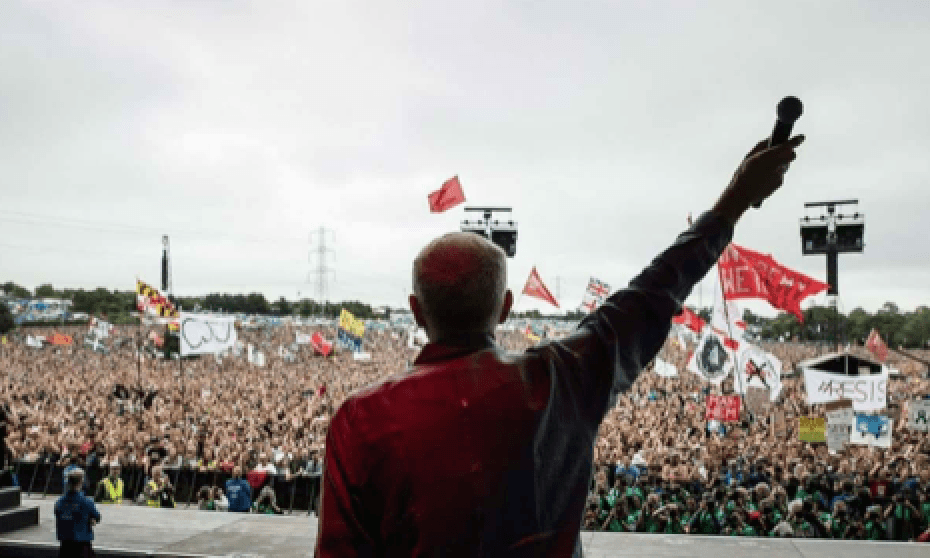
These words were spoken byJeremyCorbyn, leader of the British Labour Party atGlastonburyFestival, one of the largest music festivals in the world. Over a hundred thousand visitors, shouting “ohJeremyCorbyn” like at a football match, listened to his speech. A larger crowd had not been seen there since the RollingStonesplayed a concert there a few years ago. But who is thisJeremyCorbyn, who has completely taken Britain's youth by storm? How is it that this seasoned activist, who has been like a voice crying in the wilderness since the 1970s, has now become as popular as a rock star among young people, the millennial generation who, according to writings, were supposed to be completely indifferent to politics? This 68-year-old politician, a hero to young people. The man whomTonyBlairand the right-wing clique around him generally laughed at, saying he was of no more use than as a symbolic leftist, the honourable Member of Parliament forIslingtonNorthin northLondon, in an area probably best known for being the home of the football clubArsenal.
I got an insight into what was going on when, for the first time since I moved toLondon, I was canvassing with Labour Party supporters in my constituency in westLondon. Two years ago, the Labour Party won this constituency from a Conservative MP by only 271 votes, so this constituency was high on the list of constituencies that the Conservative Party intended to win easily in elections where the party aimed for a big victory. At the Labour Party office, a group of several hundred people had gathered, so large that neighbouring constituencies were offered assistance; many went over toKensington, not because the party expected to win a parliamentary seat there (which actually happened, by 20 votes!),Kensingtonhad elected a Conservative MP since 1918! A few young people and I, most of them just over twenty, set off around the neighbourhood to knock on doors. I used the time between doors to chat with the young people. There are hardly words to describe how starry-eyed these young people were towardsCorbyn. They were there to supportJCand his policies, much more so than the Labour Party. He was the politician they had been waiting for all their lives, with policies that spoke directly to them.
JeremyCorbynhas a long and distinguished history in British politics. Ever since he was young in the 1970s, he has been at the forefront of the struggle for socialism and justice, from opposition toApartheidin South Africa, to the struggle for justice for Palestinians, the fight for LGBTQ+ rights, and above all, strong opposition to warfare in the Middle East.Corbynwas one of the main leaders of the “StoptheWarCoalition” which fiercely opposed the warfare ofGeorgeW.BushandTonyBlairin Iraq. Ever sinceCorbynwas elected to parliament in 1983, he has been among the most radical Labour Party MPs, MPs who have upheld socialism and class struggle. It was precisely this steadfastness that was to be a key factor in appealing to young people, which contributed to the election ofJeremyCorbynas leader of the Labour Party in 2015.
After the Conservative Party came to power in Britain in 2010, with the support of the Liberal Democrats, Britain went through a harsh period of austerity. Benefits were severely cut, municipal contributions halved, and tens of thousands of police officers and firefighters were laid off (which later came to light in the wake of the terrorist attacks inLondonandManchester, as well as the horrific fire in northKensington). At the same time, the Labour Party has been in disarray. An election was held betweenMilibandbrothers David andEdin the 2010 leadership election, with the symbolic participation ofJonCruddas, who was considered somewhat to the left in the party. David was the candidate of theBlairites, but he narrowly lost to his younger brotherEd. When the next election came in 2015, the party ran a colourless campaign under the banner of acentrist election manifesto. As expected, the right-wing press (80% of British newspapers) launched a fierce smear campaign againstEdMiliband. The Labour Party received only 9,347,304 votes or 29%, and the Conservative Party gained a clear majority in parliament.Milibandresigned as leader, and a leadership election followed, which was expected to be between the right-wingerLizKendall, who was supported by theBlairites, and the centristsYvetteCooperandAndyBurnham(current Mayor ofManchester).Cooperwas considered part of theBrownites, whileBurnhamwas considered a moderate leftist, supported by supporters ofEdMiliband. In addition to these “heavyweights,” there was the symbolic candidate of the hard left in the party,JeremyCorbyn, who barely scraped together enough MP nominations to be included. But then something happened.Corbyn, with very little support from the Labour Party parliamentary group, took his campaign directly to the people. They listened, especially young people who joined the party in large numbers to be able to vote forCorbyn. Then older leftists like myself also joined, people who had had enough ofBlairismand the surrender toThatcherism. Corbynwon a landslide victory, receiving almost 60% of the votes. Next cameBurnhamwith over 19% and theBlairiteKendallreceived only 4.5%. The incredible had happened: a true socialist had been elected leader of the Labour Party! The right-wingers andcentristsin the party licked their wounds, convincing themselves thatCorbynwould not last long. All the press, even the so-called left-wing press liketheGuardian, went to war withCorbynin a classic way: first, they tried to ridicule him, then the smear campaign began, reaching its peak on election day 2017.
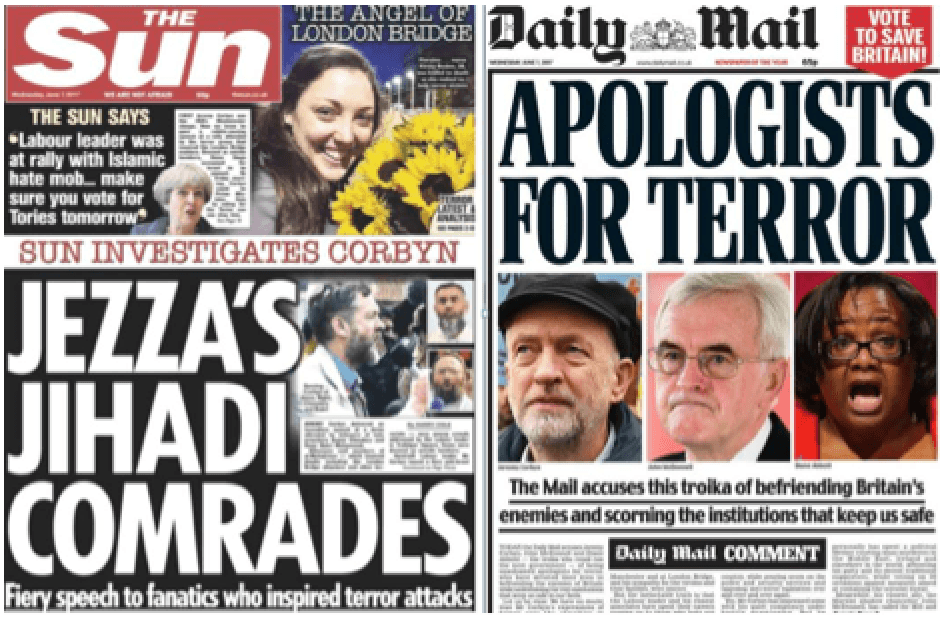
Snap elections were called this June. When May called the elections, the party had a 25 percentage point lead over the Labour Party, and Corbyn was considered the most unpopular Labour Party leader ever. But Corbyn and the Labour Party ran a magnificent campaign, combining mass rallies with Corbyn and a massive online campaign to counteract the dominant right-wing press. The result was spectacular: the Conservative Party lost its majority in parliament, held on due to good results in Scotland for the first time in a generation, and because of the collapse of UKIP, which is a populist far-right party. The Labour Party's support increased more than in all elections since 1945. The party received 40% of the votes, 12,877,869 votes, thereby adding about 3.5 million votes. Young people turned out to vote better than in a long time. The elections that were supposed to crush Corbyn made him a national hero, and most believe it is only a matter of time before he takes over as Prime Minister.
This incredible turn of events is not unique to Britain. We witnessed the rise of Bernie Sanders in the United States, another socialist on the older side who appealed to young people. In Iceland, we see radicalism increasing, and Enhedslistinn (the party furthest to the left in Denmark) is on the verge of becoming the largest party in the municipal elections in Copenhagen. Young people, in particular, are waking up; they do not want this world we have created for them. Classic socialist values are back in fashion, in a new 21st-century guise. The struggle is just beginning; wealth continues to accumulate in ever fewer hands. But real leftism, socialism, is certainly on the rise. 21st-century socialism built on centuries-old traditions of struggle. For Shelley's words, which Corbyn quoted at the Glastonbury Festival, are as valid today as they were 200 years ago. We are many, they are few.
Guðmundur Auðunsson